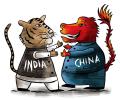
India and China have announced a series of measures aimed at improving their relationship, including maintaining peace along the border, reopening border trade, and resuming direct flights.

US Secretary of State Micheal Pompeo and Secretary of Defence James Mattis will travel to New Delhi next month for the 2+2 dialogue.

India expects partners to understand its policy of 'zero tolerance' against terrorism, and it will never countenance 'perpetrators of evil' being put on par with its victims, External Affairs Minister S Jaishankar said on Saturday during extensive talks with his British counterpart David Lammy.

Cameron will focus on education, trade and national security in his discussions with the Pakistani leaders.
The 17 rare earth elements that are at the centre of the current crisis are critical components of everyday products -- from cars to jet engines to electronics like smartphones and flat-screen TVs.
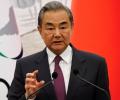
China on Tuesday called for a 'comprehensive and lasting ceasefire' between India and Pakistan, urging both countries to properly handle their differences through dialogue.

India and the US on Thursday said they are looking forward to the reconvening of the India-US Trade Policy Forum later this year to further enhance trade relationship and identify new areas for engagement.
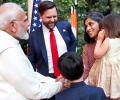
Prime Minister Narendra Modi and US Vice President JD Vance have expressed satisfaction with the progress made in negotiations for a bilateral trade agreement. The two leaders met in New Delhi and discussed a range of bilateral issues, including cooperation in energy, defense, strategic technologies, and other areas. They also exchanged views on regional and global issues of mutual interest.
The second such dialogue is aimed at discussing ways to enhance investments and business engagement between the two of the fastest growing economies, significantly at a time when the western world is in deep crisis.
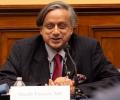
Tharoor said if Pakistan were to dismantle the infrastructure of terrorism, "we can talk to them".
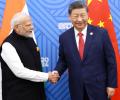
Chinese President Xi Jinping on Wednesday pledged to strengthen the strategic relationships with neighbouring countries by 'appropriately' managing differences and enhancing supply chain ties as China's tariff war with the United States escalated.

Following the disengagement, both sides will soon start the coordinated patrolling in their respective areas, sources added.

Prime Minister Narendra Modi on Thursday said India and Italy have decided to elevate their bilateral ties to a strategic partnership, opening a new chapter on defence cooperation.
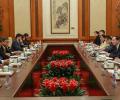
In the talks, China emphasised that the two sides should proceed from the fundamental interests of China, India and adhere to the strategic height and long-term perspective of China-India relations, the readout said.
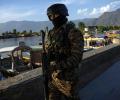
The 'mediation' by the United States from behind the scene on the diplomatic track appears to be once again working, which calls on both Delhi and Islamabad to show restraint and pull back from a military confrontation, notes Ambassador M K Bhadrakumar.
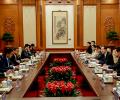
'We remain in touch with the Chinese side, in Beijing as well as in Delhi, to bring predictability in the supply chain.'
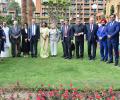
All-party parliamentary delegations on Monday met with the leaders of several countries and highlighted India's resolve to combat terrorism, which they stressed must be eradicated in the interests of all humanity.

'While my generation carries with it the memory of the Chinese perfidy of 1962, this generation will carry the memory of Chinese perfidy in Galwan.'

Jaishankar's talks with Yang and later in the Strategic Dialogue were expected to cover the key India-China differences like China blocking India's bid to join the NSG and UN ban on Azhar.

'Given China's past behaviour and their territorial claims, should we be sceptical regarding China's willingness to adhere to these agreements fully? The answer is yes.' 'As Ronald Reagan famously said in the context of the SALT talks, 'Trust, but verify!' India should also do the same.' 'This has already begun with foot patrolling, drones, satellite imagery and so on. India's military deployment did mirror China's and will continue to do so in the future.'

The compulsion behind India and Japan to deepen security cooperation is in response to China's growing political and economic clout and its assertive behaviour in disputed areas. This has been the key driver for bringing both India and Japan closer in the domain of security cooperation, explains Dr Rajaram Panda.

Sartaj Aziz has blamed India for allegedly "creating hurdles" in the way of process to normalise the relations between the two countries.

India's Army Chief, General Upendra Dwivedi, emphasized the Indian Army's role as a "melting pot" and cited the harmony between Kuki and Meitei soldiers in the same units as an example of the force's unifying nature. He made the remarks during a lecture in Pune, highlighting the Army's efforts to promote unity and integration within its ranks. General Dwivedi also touched upon the Army's role in internal security in Jammu and Kashmir, the Northeast, and the upcoming Olympics.

'Tensions and dialogue are likely to go hand-in-hand with China.' 'The goal should be to cultivate power so that one can negotiate from a position of strength.'
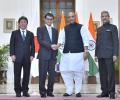
The India-Japan 2+2 dialogue added strategic heft to the special relationship in the wake of growing Chinese assertiveness on regional affairs, points out Dr Rajaram Panda.

He also said that his country would continue to talk about the Kashmir issue "through channels that are acceptable" and prayed that "the issue is amicably resolved".

In his opening remarks at the talks, Defence Minister Rajnath Singh asserted that India is confident of overcoming the challenges with a strong political will and an inherent capability of its people.
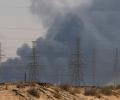
Nearly two weeks after drone and missile attacks on its vital oil facilities, Saudi Arabia has said it is enhancing cooperation with India to combat terrorism, including choking funds to terror networks and exchange of information and intelligence.

US envoy Eric Garcetti on Thursday said he respects that India likes its "strategic autonomy", but in times of conflict, there is no such thing as strategic autonomy, even as he pitched for forging a stronger partnership between New Delhi and Washington.

Prime Minister Narendra Modi on Friday held bilateral talks with Italian counterpart Giorgia Meloni in Bari during which they discussed defence and security cooperation and hoped for further enhancing the defence industrial collaboration.
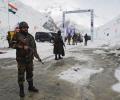
With Beijing remaining intransigent on the withdrawal of additional troops deployed by the People's Liberation Army (PLA) since the deadly border clash in 2020 in eastern Ladakh, India's bilateral ties with China remained frozen in 2023 with no forward movement on the horizon despite several rounds of diplomatic and military talks.

The India-US strategic partnership is characterised by mutual trust and both sides are increasingly in agreement on key issues, such as countering China's aggression, promoting a free and open Indo-Pacific and addressing regional security challenges, Defence Minister Rajnath Singh said on Friday.

PM Modi went to New York this time not to engage in polemics, but to find solutions to global problems. He made some progress on several matters, even on reform of the UN Security Council, when the US made a major concession for the first time that six permanent members without veto, including India, could be considered

The Quad summit to be hosted by India in 2024 is likely to enhance New Delhi's strategic intent.

In his address to RIC Foreign Ministers, Wang said the three countries should 'correctly handle and properly deal with sensitive factors in bilateral relations and safeguard the overall interests of mutual relation', without directly referring to the current round of India-China military tensions along the Line of Actual Control, (LAC).

'We are confident that the US manufacturing industry will be able to take advantage of the US-India Investment Initiative to effectively support our goals of assisting in the development of three Indian cities -- Ajmer, Vishakhapatnam and Allahabad -- where the United States will be the lead partner,' Senators Warner and Cornyn told Obama.

India and Singapore on Tuesday elevated their ties to the 'strategic partnership' level and signed bilateral agreements for enhanced defence cooperation and in areas like cyber security, shipping and civil aviation.
Brazil, a prominent member of Nuclear Suppliers Group, on Monday agreed on a civil nuclear cooperation with India as the two countries initiated a strategic dialogue to bolster ties aimed at taking bilateral trade up to $10 billion by 2010, from the

Secretary of State John Kerry arrived in New Delhi onto participate in the fourth round of Indo-US strategic dialogue even as US announced to invest $100 million in India's burgeoning clean energy sector.
 © 2026 Rediff.com - Advertise with us - Disclaimer - Privacy Policy - Sitemap - Feedback - About us - Terms of use - Grievances